



By Dan Zarlenga, Missouri Department of Conservation
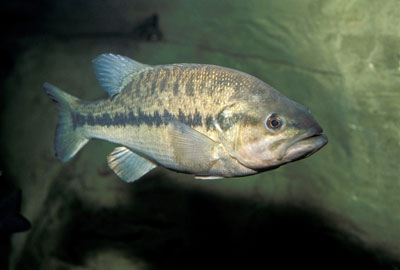
Photo caption: Largemouth bass are one of Missouri’s fish triggered into action by the onset of spring. Photo by Jim Rathert, Missouri Department of Conservation.
April lights the fuse for an explosion of life across Missouri. Bird choruses erupt at dawn, buds swell and burst from tree branches, and flowers scatter color across the forest floor. To us landlocked humans, these are the signs we recognize as spring.
But deep under the water’s surface of Missouri ponds, lakes, streams, and rivers, the onset of spring is just as profound, even if not as obvious to us airbreathers. A whole different set of natural cues triggers a wave of aquatic renewal.
April signals the start of the peak spawning surge for many Missouri fish. What are the triggers that pierce the depths, and set into motion this reproductive rush?
It’s a chain reaction born of three main factors: warmth, light, and motion.
Fish are cold-blooded, or ectothermic, so they derive their heat from the external environment rather than from within their own bodies. Their metabolisms closely track the temperature of the water. As Missouri waters warm through the 50–60 degrees F range, hormones that control reproduction begin to surge within the fish, motivating them to begin their procreative processes.
Even underwater, the power of the sun’s light penetrates the depths. Fish can detect the increasing daylight that occurs after the vernal equinox. Growing day length is the seasonal clock that tells fish winter has passed, and the warmup of spring is under way.
Movement creates its own kind of magic within the waters. Spring brings rain; streams swollen by showers and rising reservoirs mimic natural flood cycles with which many fish species have evolved. The water’s flow and turbidity stimulate spawning migrations.
The three converging factors of temperature, light, and motion ignite a biological cascade within the water.
White bass begin upstream spawning runs in rivers and tributaries. In coves, largemouth bass males fan shallow bowl-shaped nests. Crappie make their way to flooded brush and shoreline shallows. Bluegill start nest building as the shallow waters warm. Darters flash spectacular, iridescent colors on stream bottoms.
It’s a system-wide awakening—brought on by a shift in temperature, some extra photons, and a swirl of motion. This is the springtime hidden from us surface-centric humans, preoccupied by redbuds and robins.
On your next spring outing, take a look at your local creek, pond, or river; but see it differently. Within that aquatic world know that there is an explosion of springtime activity—hidden from our view—but just as significant and dramatic as blooming flowers and crooning avians.
Beneath Missouri’s lakes and streams, the triad of sunlight, warmth, and the turning of seasons are already igniting a new generation of fish.